Topical
Hentet fra DATA1100 (Technology and society)

Hentet fra DATA1100 (Technology and society)
The growing consumption of electronic devices is a sustainability challenge, but new technologies may also provide important solutions for sustainable transitions. The eco-modernists argue that we can only achieve sustainable societies through advanced technological solutions. Watch a video about eco-modernism here:
What is your opinion about the eco-modernist manifesto? Considering sustainability as consisting of a social dimension as well as an environmental dimension, to which extent do you think eco-modernist cities can be sustainable cities?
A large part of the planet consists of ocean, and the oceans contain many resources that human beings have previously ignored. Marine innovation is enabling us to utilize more of these resources. How can we do this in sustainable ways? This is the topic of this video with Jessica Giannoumis at University College Cork.
Does marine resources play a greater role in our society now than a decade ago? If so, how? If not, do you think it should? Why?

In this module, we will get an overview of what big data and artificial intelligence is and how it can be applied in different professions. We will also discuss ethical and security-related challenges connected to the application of these technologies.
A basic understanding of what algorithms and digitization are is important for gaining knowledge about the role that big data and artificial intelligence play in society. In the next video, André Brodtkorb, Associate Professor at Department of Computer Science, OsloMet, will explain some of the basic concepts of digital technology.
In the following video, Gustavo Mello, Senior Researcher at Department of Computer Science, OsloMet, will give an introduction to big data and artificial intelligence.
Consider the roles algorithms play in your daily life, at home, and at work. Confront your reflection with your group.
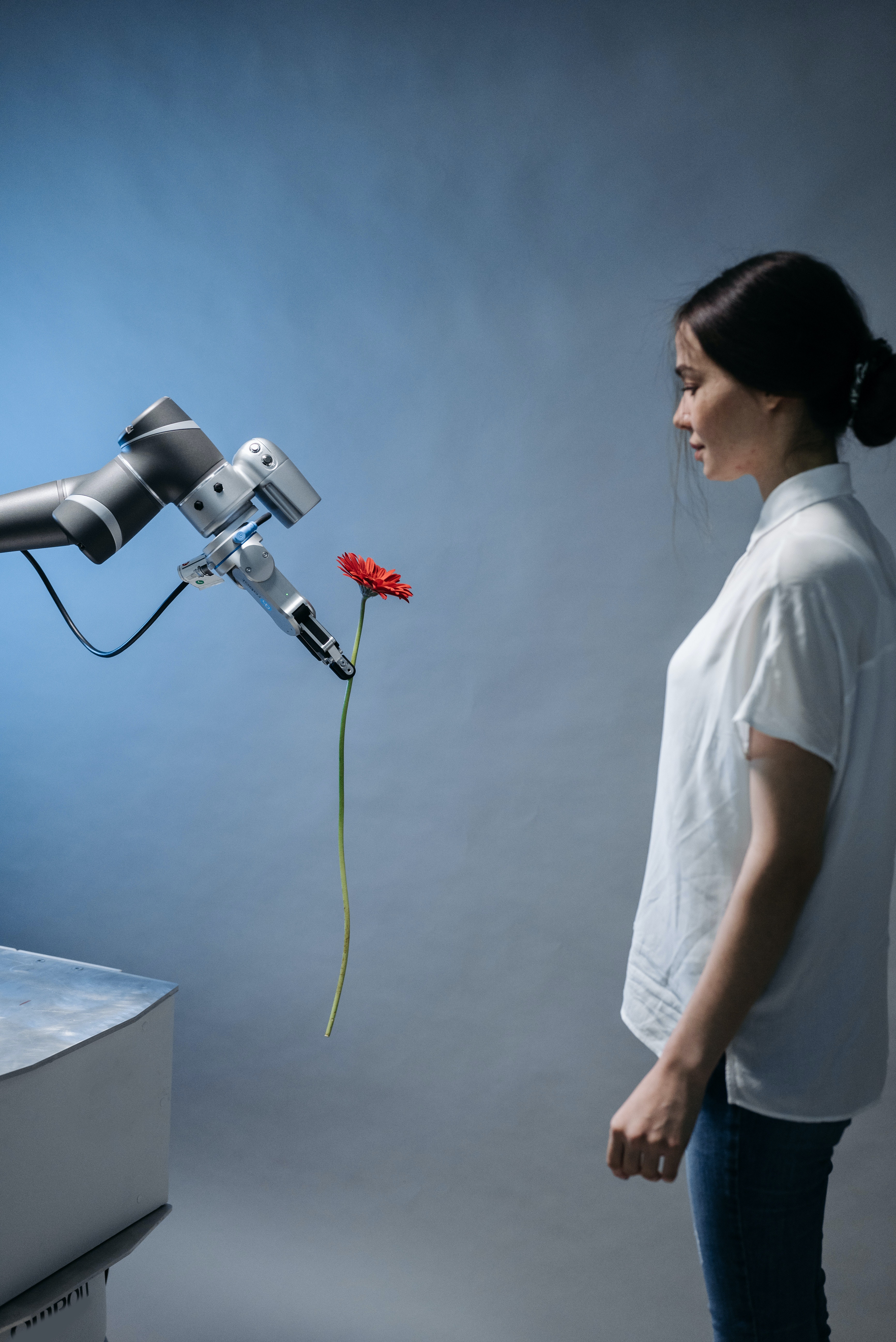
Asafu-Adjaye, J., Blomquist, L., Brand, S., Brook, B. W., DeFries, R., Ellis, E., Foreman, C., Keith, D., Lewis, M., & Lynas, M. (2015). An ecomodernist manifesto.
March, H. (2018). The Smart City and other ICT-led techno-imaginaries: Any room for dialogue with Degrowth? Journal of Cleaner Production, 197, 1694 – 1703.
Bonner, S. Kureshi, I. Brennan. J. Theodoropoulos, G., (2017). Exploring the Evolution of Big Data Technologies In Mistrik, I. Bahsoon, R. Ali, N. Heisel, M., Maxim, B., Software Architecture for Big Data and the Cloud, Morgan Kaufmann: https://doi.org/10.1016/B978-0-12-805467-3.00014-4 Links to an external site.
Gonfalonieri, A. (2019, April). What is an AI Algorithm? Retrieved from: https://medium.com/predict/what-is-an-ai-algorithm-aceeab80e7e3 Links to an external site.